
By Sara Cogan, MS, Exercise Physiologist
Osteoporosis is a bone disease characterized by weak and fragile bones, increasing the risk of fractures. It occurs when the creation of new bone doesn’t keep up with the loss of old bone, affecting all types of people, but particularly older women who are past menopause. Osteoporosis doesn’t usually display symptoms until a fracture occurs, increasing the risk of bone damage during falls or other higher risk activities.
The great news is that regular exercise can help reduce the risk of osteoporosis related falls and fractures by helping people with the disease maintain strength, balance, and independence!
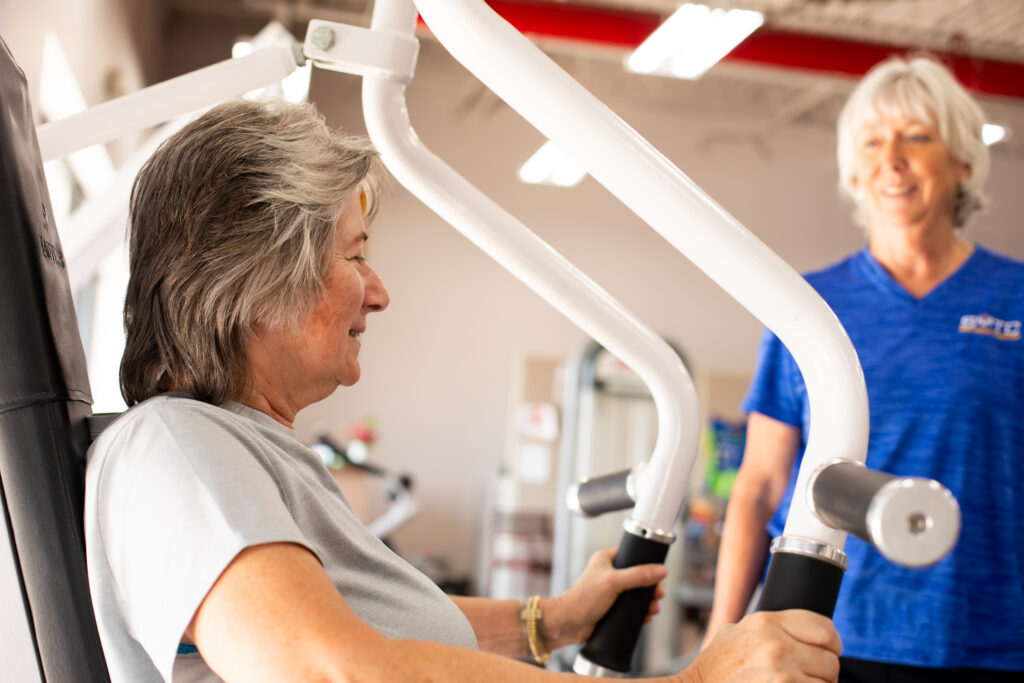
- Resistance exercises using weights, bands, or body weight strengthen muscles and may help preserve bone density through bone remodeling.
- Balance and posture exercises including using balance boards and balance exercises, as well as yoga movements, can also improve balance and therefore reduce the likelihood of falls, a major cause of fractures in people with osteoporosis.
- Weight-bearing activities such as brisk walking, jogging, stair climbing, and dancing, encourage bones to work against gravity, as well as create “stress” on the bone that encourages the body to respond with bone remodeling during recovery from the activity.
The most effective routine is consistent, moderate and tailored to the individual. People with osteoporosis should begin gradually and seek guidance from a healthcare professional or qualified exercise physiologist or personal trainer, especially if they have had a fracture or are experiencing any symptoms like bone pain or stress reactions in the bone. In particular, high impact movements or ballistic movements like power lifts or bouncing during stretching, especially involving twisting, may not be suitable for people with osteoporosis. However, with appropriate precautions, regular physical activity can be a very effective tool to support osteoporosis treatment and prevention of fractures.
Although exercise cannot fully restore lost bone, it can slow further bone loss and improve the muscles that support and protect the skeleton. Through muscular work that “tugs” on the bone with activity, the bone repairs itself in response, which in turn helps prevent further bone loss and reduce the risk of fractures.
Sources:
https://www.mayoclinic.org/diseases-conditions/osteoporosis/symptoms-causes/syc-203 51968
